
5 Reasons Financial Sector Employers Should Include a Federal Criminal Search in Background Screening
Certain offenses may only appear in federal court records. A National Federal Criminal Search reviews records from all 94 U.S. Federal District...
Making screening easy for candidates
.svg)
With Verified Credentials' mobile-first candidate experience, you meet candidates where it's most convenient. Learn how easy we make it.
Featured resource
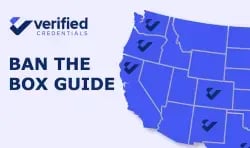
Our new Ban the Box Guide makes it easier than ever to decipher the patchwork of fair chance laws across the country. Check the map to quickly identify what laws apply to you.

Verified Credentials is proud to be accredited by PBSA and an original founding member. Our accreditation confirms that our policies, processes, and team member training meet rigorous industry compliance standards.
2 min read

If you are involved in your team’s background screening and hiring process, you're probably familiar with the “7-year lookback rule” for criminal history. Having a solid understanding of applicable expiration dates for adverse action is a critical part of making informed and compliant decisions that create fair opportunities for candidates and employees. In this article, we will shed light on what the 7-year lookback rule typically includes and excludes, as well as other factors to consider regarding an individual’s past.
The seven-year reporting rule stems from the Fair Credit Reporting Act (“FCRA”), which limits the reporting and visibility of civil suits, civil judgments, records of arrest, and other adverse information--not conviction records. The purpose of these limitations is to help protect individuals from the adverse effects of outdated or inconsequential information that could unjustly influence future employment opportunities.
Under the Fair Credit Reporting Act, there are certain exceptions to the 7-year lookback rule. The most common exception is that this rule does not apply to employment for individuals whose annual salary is, or is reasonably expected to be, equal to or greater than $75,000.
Non-compliance with the 7-year rule can lead to legal repercussions for employers. Violations can result in statutory damages ranging from $100 to $1,000, or more, per violation. Violations that are deemed intentional could also result in punitive damage and attorney fees. Beyond financial penalties, failing to adhere to the FCRA or applicable state and local laws can damage an organization’s reputation and erode trust with potential and current employees.
Some states and jurisdictions have also enacted separate laws that go beyond FCRA regulations, imposing additional local restrictions. While FCRA reporting restrictions specifically govern what information a consumer reporting agency may provide, adverse action laws govern the process employers must follow when making decisions based on any information received. Together, these layers of regulation shape both what employers can see under FCRA and state reporting limitations, and what they are required to do before taking adverse action.
For example, some state and local laws that impose limits on how far back employers may consider certain records include exemptions for serious felonies involving:
As a free resource for all HR and hiring professionals, our adverse action map helps employers stay aligned with local reporting requirements and receive periodic updates on regulations that affect adverse action at the state level.
We offer a suite of comprehensive and customizable background checks and verification services. In addition to complying with laws that apply to consumer reporting and background screening agencies, Verified Credentials also maintains Professional Background Screening Association (PBSA) accreditation. We also offer customizable filters and flexible ordering options to help employers run quick, consistent, and convenient background checks and simplify compliance obligations throughout the employment background screening process.
This content is for informational purposes only and shall not constitute legal opinion or advice. Employers are responsible for applying certain rules and regulations imposed at the state and federal levels. Consult your legal counsel to ensure compliance.

Certain offenses may only appear in federal court records. A National Federal Criminal Search reviews records from all 94 U.S. Federal District...
Review key points from the HR.com State of Legal Compliance and Employment Law 2025 report, sponsored by Verified Credentials, for insight into the...

We’re committed to providing knowledge and resources surrounding student placement compliance. Check out our 2026 Student Screening Trends and...