
What We Loved at SHRM25
The Verified Credentials team was fortunate to attend SHRM National 2025, where we learned about what is expected from HR professionals in 2025 and...
Making screening easy for candidates
.svg)
With Verified Credentials' mobile-first candidate experience, you meet candidates where it's most convenient. Learn how easy we make it.
Featured resource
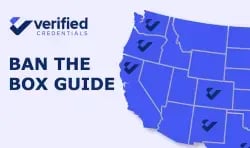
Our new Ban the Box Guide makes it easier than ever to decipher the patchwork of fair chance laws across the country. Check the map to quickly identify what laws apply to you.

Verified Credentials is proud to be accredited by PBSA and an original founding member. Our accreditation confirms that our policies, processes, and team member training meet rigorous industry compliance standards.
3 min read
.png?width=844&height=441&name=Blog%20Image%20-%20AI%20Candidate%20Fraud%20(1).png)
AI-driven candidate fraud is becoming more sophisticated and harder to detect with traditional hiring methods. If you’re responsible for screening candidates, you’ve probably had experience combating AI and candidate fraud firsthand. Unfortunately, the battle to prevent hiring fraud has become a new norm. In fact, according to a recent study conducted by Forbes, around 70% of applicants lie on their resumes.
Of course, not all lies in applications come from AI, and not all resume fraud is intentional, but AI has made creating fraudulent resumes and fabricated candidate representations faster, easier, and sometimes harder to detect.
AI candidate fraud is the use of artificial intelligence tools to misrepresent identity, experience, or qualifications during the hiring process. Less malicious uses of it may involve using AI to enhance and pack a resume with key words to match a job description and break through the clutter, letting details that bend the truth slip through the cracks. AI has made creating an entire work history, mass-producing resumes, and even assisting with creating a LinkedIn profile to match a fabricated resume faster and easier than ever. Some candidates use AI assistants during live interviews, or even to alter their physical appearance.
CBS News recently released a story about an interview with a candidate suspected of using an AI face filter. When the interviewer asked the candidate to raise their hand in front of their face, they refused, confirming they were likely using a face filter that would break if the software couldn’t track an obstruction over the candidate’s real face.
From an employer's perspective, regardless of intentions, missing key details can quickly undermine the requirements of the role and even affect your bottom line. A resume that contains false information in key areas isn’t just an inefficient match for a job; it wastes time and resources that your team needs to spend reviewing candidates who are suitable for an open position.
AI can create fraudulent, polished histories and profiles in minutes, which is why anchoring hires to identity and verifications early on is so important. You can’t stop people from committing resume fraud, but you don’t have to be a victim of hiring an unqualified employee with a fabricated resume or profile, either. Leveraging the right searches and verifications tied to identity and work history is one of the easiest things employers can do to prevent it. Perhaps this is the reason we saw a 17% spike in total orders for employment history verifications from 2024 to 2025 in our 2025 Background Screening Trends Report data.
By uncovering potential name variations, address history, and other identifying details, an Address History Trace can reveal potential inconsistencies or gaps in candidate history. Sometimes, it is a matter of unintentionally omitting information, but an Address History Trace can be particularly valuable if candidates are attempting to distance themselves from past records or obscure parts of their background by excluding past addresses or names.
There’s good news for employers that already use E-Verify for employment eligibility verification. This program helps participating employers confirm identity information for every new hire by matching I-9 data against federal records, which can help reduce the risk of fake resumes, made-up work histories, or AI-generated profiles slipping through the cracks.
Verifying employment eligibility within the first three days of employment, as E-Verify requires, helps confirm candidate identity and work eligibility early in the employment journey. Verified Credentials serves as a Designated Agent for E-Verify, simplifying employment eligibility checks, securely storing results, and providing real-time status updates to make confirming a candidate’s government-verified identity and staying audit-ready faster and easier for employers.
Alongside identity and work eligibility verifications, professional verifications go beyond candidate claims by confirming previous employers, academic experience, and professional licenses or certifications, helping firm up trust. By verifying employment history, education, and licenses directly with the source, employers can easily confirm that roles and titles match the resume, and credentials hold up.
Resume fraud can do more than just waste your team’s time. It can slow down department projects, hurt ROI, and even put your organization at risk. Straightforward and reliable verifications help you protect your time, your team, and the relationships you’ve worked so hard to build.
As AI continues to evolve, so too will the methods candidates use to present themselves in the hiring process. While this shift introduces new challenges, it also underscores the importance of adapting your screening strategies to meet the moment. Relying solely on traditional resume reviews is no longer enough, and today’s hiring landscape demands a more proactive, verification-first approach.
By prioritizing identity checks, employment eligibility verification, and direct-source professional verifications, employers can significantly reduce the risk of falling victim to AI-driven fraud. These steps not only help ensure you’re hiring qualified candidates, but also protect your organization’s time, resources, and reputation.
Ultimately, the goal isn’t to eliminate AI from the hiring process; it’s to outpace misuse with smart and reliable safeguards. Organizations that embrace thorough screening practices will be better positioned to build trustworthy teams, make confident hiring decisions, and remain resilient in the face of hiring challenges.
The content above is for informational purposes only. Please consult with your legal counsel before selecting a background screening provider.
The Verified Credentials team was fortunate to attend SHRM National 2025, where we learned about what is expected from HR professionals in 2025 and...

Explore the balance between AI efficiency and candidate trust in background screening, and the importance of human oversight for effective hiring.

Discover the top HR tech trends for 2025, including AI-driven solutions, combating resume fraud, and enhancing candidate experiences for a...